
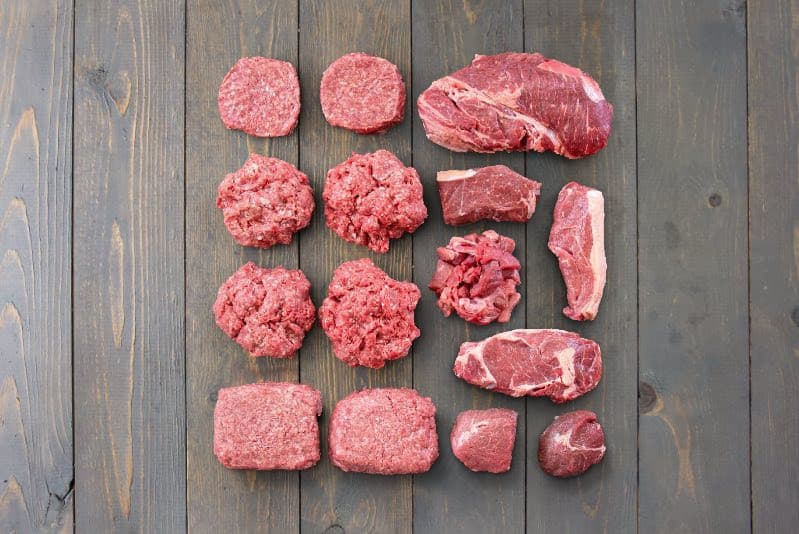
Quarter cow cuts
What you actually take home
Plan on roughly 200 lbs of product all in: steaks and roasts, ground and stew meat, trim, bones. Exact numbers move with the animal and how you fill out the cut sheet, but the list of cuts stays familiar.
Reserve your quarter cowTypical quarter cow breakdown
Note: Weights and cuts are ballpark figures. They change with the animal, the farm, and how you mark up the cut sheet. Not every locker labels or offers the same items.
~150 lbs total
Ballpark packaged weight including steaks, roasts, ground, bones, and the rest
~105 lbs meat
Steaks, roasts, ground, stew meat (roughly — your processor sheet can shift this)
~35–40 lbs bones
Soup bones, marrow pieces, knuckles — broth stockpile if you want it
Front quarter cuts
Chuck roast
Low-and-slow friend. Braise it, pot-roast it, shred it for tacos when you are tired of babysitting a grill.
Ranch steak
Lean shoulder steak. Hot skillet, quick sear, slice thin. Also works cut up for stir-fry when you forgot to thaw something fancy.
Bone-in ribeye
The show-off cut. Fat and bone carry flavor; do not walk away from the heat.
Brisket
Weekend project: smoke it low, or braise until it pulls apart. Either way, clear the calendar.
Skirt steak
Thin, loose grain. Marinade helps. Slice across the grain after a hard sear — fajitas, rice bowls, whatever needs beef in a hurry.
Short ribs
Rich, sticky after a long braise. Good excuse to open wine you were saving.
Hind quarter cuts
New York strip & filet
Strip for beefy chew, filet for tenderness. Most lockers make you pick how they use the loin — this pair or the combo steaks below.
T-bone & porterhouse
Same section as strip and filet, just left on the bone. Porterhouse carries a bigger tenderloin piece; T-bone is the lighter sibling.
Sirloin steak
Weeknight steak: leaner than ribeye, still grills fine. Do not cook it past medium if you can help it.
Sirloin tip roast or steak
Versatile hip muscle. Roast it gently or slice into steaks for a quick sear — your sheet usually forces one or the other.
Top round roast or steaks
Rear leg, lean. Roast with liquid or slice thin for London-broil-style cooks.
Eye of round roast
Very lean roast. Slice thin across the grain and do not skip rest time — it tightens up if you hack at it hot.
Bottom round roast
Pot-roast territory, or slice thin for sandwiches if you chill it first.
Ground beef & trim
Per quarter: 50 lbs of trim
Ground beef options
- 40 lbs standard ground
- Ground with organs (if you ask)
- Fat blend: 80/20, 90/10, or what the locker runs
Cubes & stew meat
- 10 lbs stew cubes (typical starting point)
- Trade some roast weight for more cubes if the locker allows
- Chili, soup, slow cooker days
Processing notes
Freezer math
Ground is what you burn through first. Splitting into 1 lb (or 1/2 lb) packs saves you from thawing two meals at once.
- 1 lb packs for tacos, meatloaf, big skillets
- 1/2 lb packs when you cook for one or two
- Vacuum seal buys you months of wiggle room
Bones & broth
~35–40 lbs of bones per quarter
These ride along with the share. Simmer them for broth, or ask your farmer what they usually do with extras. Some will buy bones back or put broth up for you when they can.
What shows up in the box
- Soup bones: ribs, neck, shank
- Marrow: femur rounds, shank cross-cuts
- Knuckles and joints for gelatin-heavy pots
Why bother
- ✓Collagen and gelatin without buying cartons
- ✓Base for soup, gravy, beans
- ✓Freeze flat in bags; thaw a brick at a time
- ✓Dogs love marrow rounds (ask your vet if unsure)
Ask the locker
Read the fine print once
Weights move
Breed, age, grass vs grain finish, and how hard the animal finished all change hanging weight and yield. Use our ranges as a conversation starter with the farmer, not a guarantee.
Not every cut is automatic
Lockers have different saws, different default sheets, and different extra fees. If you want hanger steak spelled out, write it down.
Cut sheet beats a generic list
We match you with a farm and processor, then walk through what you want: thicker steaks, more grind, less bone, whatever fits your kitchen. The list above is a map, not a contract.
Customization options
Cut preferences
- Strip and filet vs T-bone and porterhouse (loin choice)
- Roast vs steak on muscles that can go either way
- Steak thickness: thin for fast dinners, thick for reverse sear
- How many steaks per package
Processing choices
- Ground fat blend
- Organs in grind or packaged solo
- Bone-in vs boneless where it is optional
- Labeling if you split with someone else
Like what you see?
Reserve a quarter and we will help you turn this outline into packages that fit your freezer and your cooking habits.
Reserve your quarter cow